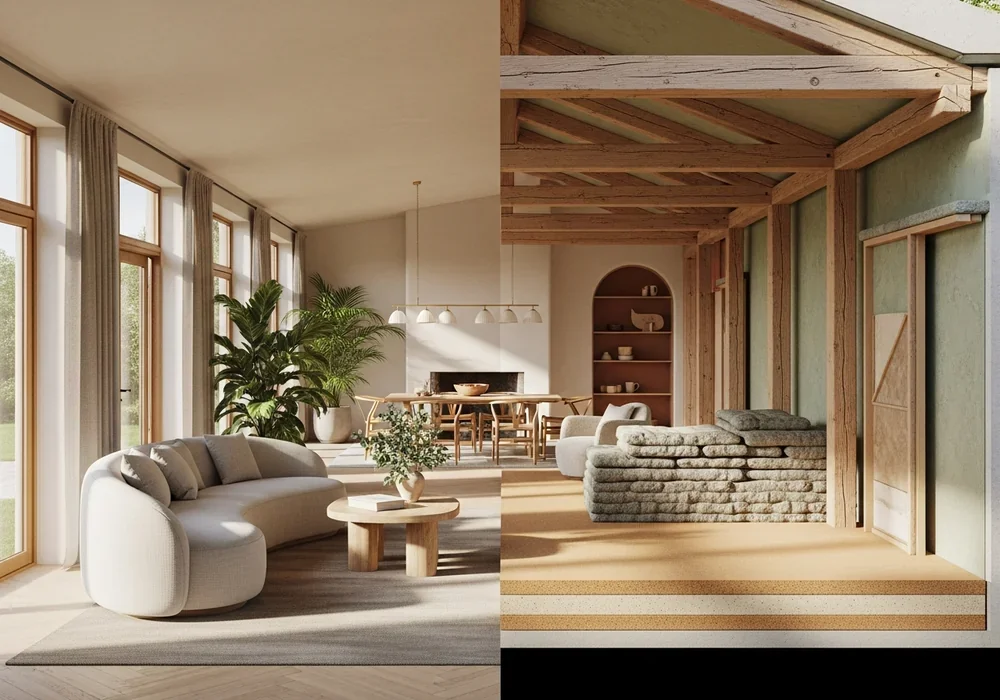
The Invisible Shift: Why 2026 Room Interior Trends and Color Styling Guide”>Interior Trends Value Ethics Over Aesthetics
Have you ever walked into a freshly renovated room and immediately felt a slight headache? Or perhaps you’ve noticed that ‘new car smell’ in a living room that just doesn’t feel right? For decades, we prioritized how a space looked on Instagram over how it actually felt to live in it. But as we step into the mid-2020s, the narrative is shifting dramatically. The 2026 interior trends aren’t just about the ‘it’ color of the year; they are about the radical transparency of what lies beneath the surface.
We are witnessing a transition from ‘fast furniture’ to ‘conscious curation.’ To be honest, the industry had no choice. With global climate goals looming, carbon-neutral home styling has evolved from a niche luxury to the new standard for the modern homeowner. It’s about creating a home that doesn’t just look like a sanctuary but actually functions as one, protecting both the planet and your respiratory health.
What makes these 2026 interior trends so compelling is the marriage of high-tech innovation and primitive biology. We are no longer just building houses; we are growing them. If you’re planning a renovation or just looking to refresh a corner of your home, understanding these shifts is the difference between a space that feels dated in two years and one that grows in value and comfort over a decade.
Nature’s Secret Lab: The Revolutionary Materials Redefining Our Furniture
Imagine a chair that was grown in a dark room over seven days rather than being carved out of a 50-year-old tree. It sounds like science fiction, doesn’t it? But this is precisely where the 2026 interior trends are heading. Designers are moving away from petroleum-based plastics and toxic glues toward ‘bio-fabricated’ materials that offer textures we’ve never seen before.
Mushroom Mycelium: Living Furniture That Breathes
Mycelium is the root structure of mushrooms, and it is arguably the most exciting development in sustainable design. By feeding agricultural waste to these fungal spores, manufacturers can ‘grow’ incredibly strong, fire-resistant, and lightweight furniture components. The visual texture is fascinating—it has a soft, velvety feel reminiscent of suede but with an organic, earthy irregularities that make every piece unique. Beyond the looks, mycelium is 100% biodegradable. When you’re done with it, it can literally return to the earth as compost.
Seaweed and Algae: The Ocean’s Gift to Modern Walls
Next time you walk along a beach, look at the kelp and realize you might be staring at your future wallpaper or flooring. Seaweed-based bioplastics are making waves in the 2026 interior trends because they require no fresh water or land to grow. These materials are being used to create translucent partitions and acoustic panels that have a natural, watery shimmer. They don’t just look beautiful; they naturally sequester carbon during their growth, making them a net-positive choice for your home.
Fruit-Based Leathers: Luxury Without the Footprint
We’ve moved far beyond ‘pleather.’ The new generation of vegan leathers made from pineapple leaves (Piñatex), apple peels, and even grape skins offers a durability and hand-feel that rivals traditional hides. These materials bring a sophisticated, tactile luxury to upholstery without the heavy environmental toll of livestock farming. In the context of 2026 interior trends, these ‘fruit leathers’ are being paired with reclaimed metal frames to create a look that is both industrial and incredibly soft.
The Health Tax You Didn’t Know You Were Paying
Let’s talk about something many people ignore: the air inside your home is often 2 to 5 times more polluted than the air outside. Why? Because of ‘off-gassing.’ Traditional paints, glues, and synthetic fabrics release Volatile Organic Compounds (VOCs) for years after they are installed. The 2026 interior trends place a non-negotiable emphasis on ‘non-toxic’ living. This isn’t just a trend; it’s a health revolution.
Deciphering the Labels: FSC, GREENGUARD, and the E0 Mystery
Buying furniture today requires a bit of detective work. If you want to ensure your home is truly sustainable, you need to look past the marketing fluff. Here is a quick breakdown of what you should actually be looking for on those tags:
| Certification | What It Actually Means | Why It Matters in 2026 |
|---|---|---|
| FSC Certified | Wood sourced from responsibly managed forests. | Prevents deforestation and ensures biodiversity. |
| GREENGUARD Gold | Strict limits on chemical emissions (VOCs). | Essential for homes with children or allergy sufferers. |
| E0 Grade | The lowest possible formaldehyde emission level. | Ensures the ‘glue’ holding your furniture together isn’t toxic. |
| GOTS Organic | Strict environmental and social criteria for textiles. | Guarantees your bedding is free from harmful pesticides. |
Actually, the E0 grade is the one most people miss. Most standard furniture is E1, which is ‘acceptable,’ but E0 is the gold standard for anyone serious about indoor air quality. When you’re following 2026 interior trends, the goal is to eliminate formaldehyde entirely, opting for solid wood or bio-composites instead.
Room-by-Room: Implementing 2026 Interior Trends in Your Real Space
It’s one thing to read about mycelium; it’s another to make it look good in your living room. The key to successful 2026 interior trends implementation is balance. You don’t want your home to look like a science lab. You want it to feel like a curated, high-end space that just happens to be incredibly kind to the environment.
The Biophilic Living Room: More Than Just Adding a Plant
Biophilic design is a core pillar of the 2026 interior trends. It’s not just about putting a fiddle-leaf fig in the corner. It’s about integrating natural patterns, light, and materials into the very architecture of the room. Think about a coffee table made from a reclaimed ‘live edge’ slab, or curtains made from raw, unbleached hemp. The idea is to create ‘visual rest.’ Use a palette of ‘earthy neutrals’—terracotta, sage green, and ochre—to ground the space. Here’s a tip: use mirrors to reflect your indoor plants, doubling the ‘green’ feel without the extra maintenance.
The Detoxed Bedroom: Creating a Sanctuary for Deep Sleep
In the bedroom, the 2026 interior trends focus heavily on ‘sensory minimalism.’ This means removing anything that triggers stress. Start with the walls: use clay-based or mineral paints. These are naturally ‘breathable’ and regulate humidity, unlike standard acrylic paints which act like a plastic bag around your room. For bedding, switch to Tencel or organic linen. These materials aren’t just eco-friendly; they are naturally thermoregulating, meaning you’ll sleep deeper and wake up feeling more refreshed.
The Circular Kitchen: Where Durability Meets Innovation
The kitchen is traditionally the most wasteful room in the house. The 2026 interior trends are changing that through ‘circularity.’ We are seeing countertops made from recycled glass and paper composites that are harder and more heat-resistant than granite. Cabinetry is being designed for ‘disassembly’—meaning you can replace just the doors or the hardware without ripping out the whole kitchen. It’s a move away from the ‘disposable’ culture toward heirloom-quality engineering.
Smart, Green, and Connected: The 2026 Tech Synergy
Sustainability in 2026 isn’t about going ‘off-grid’ and living in the dark. It’s about ‘Smart Living.’ The most advanced 2026 interior trends involve AI-driven home systems that optimize energy use. Imagine window treatments that automatically adjust based on the sun’s position to maintain a perfect temperature, or lighting systems that mimic the natural circadian rhythm to improve your mood. These technologies are being hidden behind natural materials—think smart speakers wrapped in recycled wool or touch-sensitive wooden panels—so the tech enhances the home without dominating the aesthetic.
The Longevity Mindset: How to Care for Your Future Antiques
The final, and perhaps most important, part of the 2026 interior trends is the shift in how we value our belongings. The most sustainable piece of furniture is the one you already own—or the one you buy once and keep for forty years. This requires a return to craftsmanship. Look for ‘mortise and tenon’ joints instead of screws and glue. Choose fabrics that develop a beautiful patina over time rather than those that just wear out.
To be honest, the ‘greenest’ choice you can make is to buy less, but buy better. By choosing pieces that reflect these 2026 interior trends, you are investing in a future where luxury is defined by health, ethics, and a profound connection to the natural world. Your home is an ecosystem; it’s time we started treating it like one.
자주 묻는 질문 (FAQ)
- Are sustainable materials like mycelium or seaweed actually durable?
Yes! In many cases, mycelium is more fire-resistant than traditional foam, and seaweed bioplastics are engineered for high tensile strength. They are designed to last as long as traditional materials with proper care. - Is ‘Carbon Neutral Home Styling’ much more expensive?
Initially, some innovative materials may have a higher price point. However, when you factor in the longevity, health benefits (fewer doctor visits due to air quality), and energy savings from smart/natural insulation, the total cost of ownership is often lower. - How can I tell if a brand is truly ‘green’ or just greenwashing?
Look for third-party certifications like GREENGUARD Gold, FSC, or B-Corp status. If a brand cannot tell you exactly where their raw materials come from, they are likely greenwashing.
자주 묻는 질문
What is the most important factor in 2026 interior trends?
The most critical factor is ‘transparency.’ It’s no longer just about the look; it’s about knowing exactly what chemicals are in your furniture and where the materials were sourced.
Can I achieve a 2026 look on a budget?
Absolutely. Focus on ‘minimalism’ and ‘second-hand luxury.’ Buying high-quality vintage wood furniture and refinishing it with non-toxic oils is a perfect way to align with 2026 trends without a huge investment.
What colors are most associated with 2026 sustainability?
Expect to see ‘Bio-Dye’ colors—soft, slightly muted tones derived from plants and minerals, such as dusty rose, moss green, and warm ochre.

Kumar Tomar is a distinguished writer at DesignHomes.in, specializing in home design and interior decor. Holding a degree in Interior Design from the National Institute of Design, Kumar combines formal education with practical experience to deliver insightful and authoritative content. With over 8 years in the industry, he is known for his in-depth knowledge of design trends and his ability to provide actionable advice for homeowners. Kumar’s expertise and dedication to high-quality writing make him a trusted resource for those seeking to enhance their living spaces. Follow Kumar on Instagram for the latest design inspiration and tips.