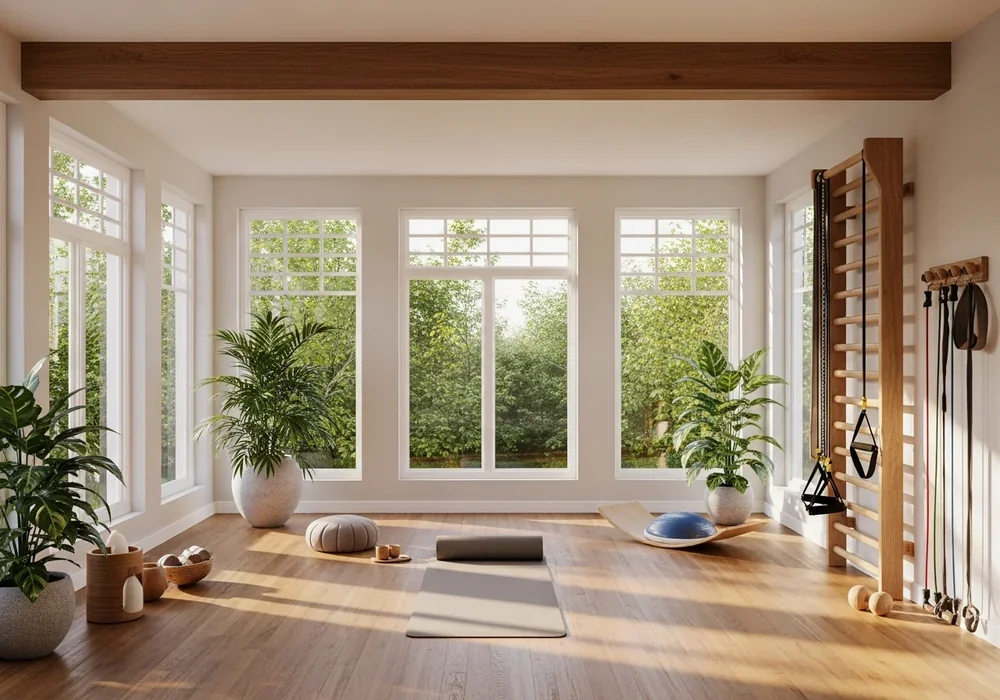
Beyond Sweat: Why Your Soul Needs a Dedicated Home Gym Interior
Have you ever tried to unroll your yoga mat in the middle of a cluttered living room, only to find your eyes fixated on the dust under the sofa or the pile of laundry in the corner? It’s hard to find your center when your environment is pulling you in a dozen different directions. A true home gym interior isn’t just about having enough floor space for a downward dog; it’s about creating a psychological boundary between the chaos of daily life and the stillness of your practice. When we designate a specific area for wellness, we tell our brains that this space is safe, quiet, and reserved for growth.
Think about the last time you walked into a high-end boutique yoga studio. It wasn’t just the expensive equipment that made you feel calm, was it? It was the deliberate choice of materials, the way the light hit the floor, and the absence of visual noise. Bringing that level of intentionality into your own home changes everything. Suddenly, your morning stretches aren’t just another chore on the to-do list—they become a ritual you genuinely crave. By investing in a thoughtful yoga room decorating strategy, you’re not just buying decor; you’re building a habit-forming environment that supports your mental health.
Honestly, the biggest mistake most people make is thinking they need a massive spare room to start. I’ve seen small room yoga interior projects that feel more expansive than 500-square-foot basements simply because they utilized the right design principles. It’s about quality over quantity. Whether it’s a corner of your bedroom or a transformed balcony home gym, the goal is to create a ‘healing’ atmosphere. Let’s dive into how we can achieve that through professional design techniques that balance aesthetics with deep functionality.
The Magic of Neutrals: Colors That Actually Lower Your Heart Rate
Color is the most powerful tool in your healing interior toolkit. Have you noticed how your mood shifts when you walk into a room painted in soft cream versus one with harsh, bright red walls? For a space dedicated to yoga and meditation, we want to trigger the parasympathetic nervous system. This is where a palette of whites, beiges, and warm wood tones comes into play. These aren’t just ‘safe’ choices; they are scientifically proven to reduce visual overstimulation, allowing your mind to turn inward more easily.
Balancing White, Beige, and Wood Tones for Visual Silence
When selecting your palette, aim for a 60-30-10 ratio. Use a soft, warm white for 60% of the space (usually the walls), a calming beige or taupe for 30% (large rugs or curtains), and natural wood tones for the remaining 10% (shelving or small furniture). This layering creates depth without adding ‘noise.’ Wood, in particular, adds an organic warmth that prevents a white room from feeling clinical. I always recommend choosing matte finishes over glossy ones; reflections can be incredibly distracting when you’re trying to focus on your breath.
| Color Category | Recommended Shade | Psychological Effect |
|---|---|---|
| Primary (60%) | Warm Alabaster / Milk White | Creates a sense of limitlessness and purity. | Secondary (30%) | Sandy Beige / Soft Greige | Provides grounding and stability. | Accent (10%) | Natural Oak / Walnut | Adds warmth and a connection to nature. |
Don’t forget the ceiling! When you’re in a bridge pose or lying in Savasana, the ceiling is your primary view. Avoid stark, ‘office’ white ceilings. Instead, use a shade slightly lighter than your walls to create an airy, open feeling. This subtle shift in meditation space interior design can make a world of difference in how ‘trapped’ or ‘free’ you feel during your practice.
Lighting Secrets That Turn a Boring Room into a Zen Temple
If color sets the mood, lighting defines the soul of the room. Nothing kills a healing interior vibe faster than a harsh overhead fluorescent bulb. For a meditation room lighting setup, you want to mimic the gentle transitions of natural light. During the day, maximize sunlight using sheer linen curtains that blur the outside world while letting in a soft, ethereal glow. This ‘filtered’ light is much more conducive to focus than direct, blinding sunbeams that create sharp shadows.
Ditching the Glare: Indirect Lighting and Dimming Strategies
As evening approaches, your lighting should shift. I highly recommend installing a dimming system if possible. If not, rely on ‘layered’ lighting. Place a warm-toned floor lamp in a corner and perhaps a few LED candles or a salt lamp near your home yoga space. The key is to keep the light sources below eye level. This mimics the low-hanging sun at dusk, which naturally prepares the body for relaxation. Indirect lighting—where the light bounces off the wall or ceiling rather than hitting you directly—is the gold standard for a professional home gym interior.
Consider these lighting elements for your sanctuary:
- Sheer Curtains: For soft, diffused natural light during morning sessions.
- Dimmable Wall Sconces: To adjust intensity based on the type of practice (vibrant vinyasa vs. quiet yin).
- Smart Bulbs: To shift the color temperature from a cool ‘focus’ blue to a warm ‘relaxing’ amber.
- Salt Lamps: For a soft, grounding orange glow that doubles as a beautiful decor piece.
Small Space, Big Zen: From Cluttered Balcony to Private Studio
You don’t need a dedicated wing of the house to create a stunning home gym interior. In fact, some of the most inspiring spaces I’ve seen are narrow balcony home gym setups or small room yoga interior nooks. The secret lies in the ’empty’ space. In interior design, we call this ‘negative space.’ It’s the area around your mat that allows your energy to flow. If your room is cramped, your mind will feel cramped too. The goal is to maximize the floor area while maintaining a sense of enclosure and privacy.
Optimizing Flow: Mirror Placement and Spatial Expansion
One of my favorite tricks for a narrow room yoga interior is the strategic use of mirrors. A floor-to-ceiling mirror doesn’t just help you check your alignment in a warrior pose; it visually doubles the size of the room. Place the mirror perpendicular to a window to bounce natural light deeper into the space. However, be careful not to place it directly in front of your meditation cushion, as seeing your own reflection can sometimes be a distraction during deep mindfulness exercises. Position it to the side so it’s there when you need it for form, but out of your direct line of sight when you’re going inward.
For those using a balcony home gym, focus on verticality. Use tall, slender plants to create a natural privacy screen. This keeps the space feeling open to the air while shielding you from the prying eyes of neighbors. It’s all about creating that ‘cocoon’ effect where you feel safe enough to be vulnerable in your practice.
Aesthetic Storage: Why Your Yoga Mat Deserves Better Than a Cold Floor
Let’s talk about the ‘clutter’ problem. Nothing ruins a meditation space interior faster than a tangled mess of foam rollers, yoga blocks, and resistance bands. When these items are strewn about, they represent ‘unfinished business’ to your brain. Professional yoga room decorating involves creating a home for every piece of equipment. But here’s the catch: the storage itself should be a part of the decor.
Rattan, Wood, and Hidden Solutions for a Clutter-Free Mind
Instead of plastic bins, opt for natural materials. A large rattan basket is perfect for holding rolled-up mats and bolsters. It adds texture and a ‘boho-chic’ vibe that fits perfectly with a healing interior. If you’re really tight on space, consider wall-mounted wooden racks. These turn your colorful yoga mats into a form of wall art, keeping the floor clear for your actual practice. I’ve often used floating shelves to hold yoga mat storage items alongside a few spiritual books or a small Buddha statue, blending utility with inspiration.
- Wall-Mounted Racks: Best for keeping mats off the floor in small rooms.
- Rattan Baskets: Ideal for hiding bulky items like foam rollers and blocks.
- Hidden Ottoman Storage: Perfect for dual-purpose rooms where you want to hide the ‘gym’ aspect when not in use.
- Pegboards: A modern, customizable way to hang straps and light weights.
Sensory Styling: The Invisible Elements of a Perfect Practice
A truly professional home gym interior appeals to all five senses. We’ve covered sight (color/light), but what about smell and touch? To reach a state of ‘flow,’ you need to immerse yourself. This is where planterior (plants + interior) and tactile elements like high-quality fabrics come in. These details might seem small, but they are the difference between a room where you ‘can’ exercise and a room where you ‘want’ to be.
Planterior and Aromatherapy: Breathing Life into Your Space
Plants do more than just look pretty; they actively purify the air, which is crucial when you’re doing deep pranayama breathing. I recommend ‘Snake Plants’ or ‘Peace Lilies’ because they are low-maintenance and thrive in the indirect light typical of a yoga room. Visually, the pops of green against a neutral beige wall create a refreshing, life-affirming contrast. Pair this with a ceramic oil diffuser or high-quality incense. Scents like sandalwood, lavender, or eucalyptus can act as a ‘scent trigger,’ telling your brain the moment you walk in: “It’s time to be still.”
Texture is another big one. Use natural fibers like cotton or linen for your cushions and throws. Avoid synthetic, scratchy materials. When you sit down for your final meditation, the softness of a linen cushion against your skin provides an immediate sense of comfort. This ‘tactile layering’ is a hallmark of high-end healing interior design.
Practicality Meets Peace: Soundproofing and Technical Comfort
Finally, we must address the practical side of a home gym interior. If you live in an apartment, the sound of your movements (or your neighbors’ TV) can be a major hurdle. This is where high-density soundproofing mats are worth their weight in gold. Don’t just settle for a thin yoga mat; layer a thick, shock-absorbing base underneath it. This protects your joints and ensures you’re not disturbing the people living below you.
Temperature and ventilation are also key. A stuffy room is a distracted room. Ensure your meditation space has good airflow. If you’re converting a small room, a quiet, minimalist ceiling fan or a high-quality air purifier is a must. You want the air to feel ‘crisp’ and ‘alive.’ By controlling these technical factors, you remove the physical irritants that might otherwise pull you out of your zen state. Remember, the best design is the one you don’t notice because everything just works perfectly.
Frequently Asked Questions
How can I make a home gym in a very small apartment?
Focus on ‘vertical storage’ and ‘multi-functional furniture.’ Use wall racks for your yoga mat storage and choose a corner with the best natural light. A simple folding screen can also help divide your workout area from your sleeping or working area, creating a mental boundary.
What is the best flooring for a home yoga space?
Natural wood or cork flooring is ideal because it’s warm and has a slight ‘give.’ If you have tiles or laminate, I recommend using a large, low-pile rug or a high-density rubber underlay to provide extra cushioning and soundproofing for your home gym interior.
Do I really need plants in my meditation room?
While not strictly ‘necessary,’ planterior elements significantly improve air quality and provide a visual ‘rest’ for the eyes. They help ground the space and make it feel like a living sanctuary rather than just a room with equipment.
How do I choose the right lighting for meditation?
Avoid any direct overhead light. Opt for dimmable lamps, salt lamps, or smart bulbs that allow you to change the color temperature to a warm, sunset-like glow. This helps your brain transition into a meditative state more effectively.
Creating the perfect home gym interior is a journey of self-discovery. It’s about stripping away the unnecessary and curating a space that reflects your inner goal of peace and strength. By focusing on neutral colors, soft lighting, and natural textures, you transform a simple room into a powerful tool for your well-being. Now, take a look at that unused corner of your home—what’s stopping you from turning it into your own private sanctuary today?
자주 묻는 질문
Can I set up a yoga space in my bedroom?
Yes, but use a visual divider like a rug or a folding screen to separate your ‘sleep zone’ from your ‘active zone.’ This prevents your mind from associating your workout space with sleep and vice versa.
What is the most important decor item for a meditation room?
Beyond the cushion, I’d say lighting. Dim, warm, indirect light is the fastest way to signal to your nervous system that it is time to relax and focus inward.
How do I keep my home gym from looking messy?
Invest in aesthetic storage like rattan baskets or wooden wall racks. When your equipment looks like part of the decor, the room feels intentional rather than cluttered.

Kumar Tomar is a distinguished writer at DesignHomes.in, specializing in home design and interior decor. Holding a degree in Interior Design from the National Institute of Design, Kumar combines formal education with practical experience to deliver insightful and authoritative content. With over 8 years in the industry, he is known for his in-depth knowledge of design trends and his ability to provide actionable advice for homeowners. Kumar’s expertise and dedication to high-quality writing make him a trusted resource for those seeking to enhance their living spaces. Follow Kumar on Instagram for the latest design inspiration and tips.