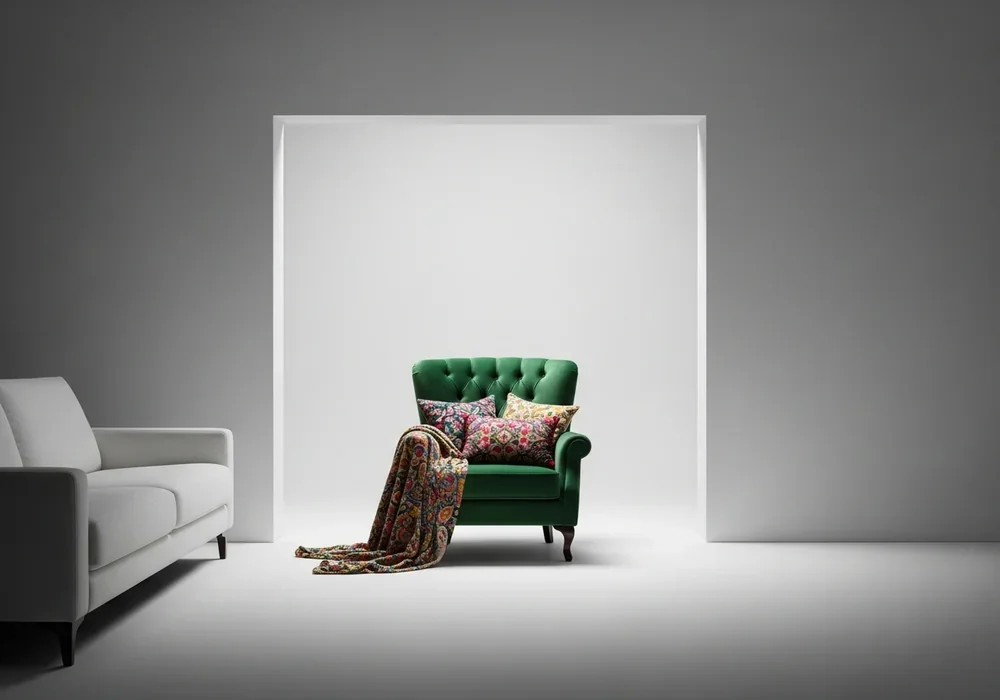
Why Your ‘Clean’ Home Might Be Boring You to Tears
Ever walked into a perfectly white, minimalist room and felt… absolutely nothing? You aren’t alone. For years, we’ve been told that ‘less is more’ and that a sterile environment is the pinnacle of modern living. But lately, there’s a growing sense of minimalist fatigue. People are tired of living in showrooms that feel devoid of life. We are craving stories, colors, and textures that actually mean something to us. This is where the maximalist interior steps in, not as a trend, but as a rebellion against the bland.
The beauty of a maximalist interior lies in its ability to showcase who you really are. It’s about surrounding yourself with the things you love—that vintage lamp from a flea market in Paris, the bold emerald velvet sofa you were told was ‘too much,’ and the gallery wall featuring your children’s art alongside professional prints. If you’ve been feeling like your home is a bit too quiet, this guide will show you how to turn up the volume in a way that feels sophisticated rather than suffocating.
By the time you finish reading, you’ll understand that maximalism isn’t about clutter; it’s about ‘curated abundance.’ You’ll learn the specific design principles, like the 60-30-10 color rule and pattern scaling, that separate a professional-looking space from a messy one. Let’s dive into how you can reclaim your space with confidence.
The Fine Line Between a Curated Collection and a Hoarder’s Paradise
One of the biggest misconceptions about a maximalist interior is that it’s just an excuse to keep everything. Honestly, that couldn’t be further from the truth. While minimalism is the art of subtraction, maximalism is the art of highly intentional addition. Every piece in a maximalist room should have a reason for being there, whether it’s a functional purpose, a visual anchor, or a deep sentimental connection.
The secret lies in ‘visual order.’ Even in a room filled with a hundred objects, the eye needs a place to rest. Professional designers achieve this by creating ‘vignettes’—small clusters of items that tell a mini-story. Instead of spreading your collection of brass figurines across every flat surface in the house, try grouping them on a single tray on your coffee table. This creates a focal point rather than a distraction. Remember, if everything is shouting for attention, you won’t hear a word. We want a symphony, not noise.
Styling Tip: The ‘Edit’ Test
Once you’ve decorated a corner, take a photo of it. Looking at a 2D image helps you spot ‘dead weight’ or areas that feel too chaotic. If an item doesn’t contribute to the color story or the texture of the room, move it to another space.
Mastering the 60-30-10 Rule for Explosive Yet Balanced Color
Color is the heartbeat of any maximalist interior. It’s what gives the space its energy and mood. However, the most common mistake beginners make is picking five bright colors and using them in equal amounts. This creates a visual vibration that can actually feel physically draining. Instead, we use the 60-30-10 rule to bring harmony to the chaos.
- 60% Dominant Color: This is usually your walls or largest rugs. In maximalism, this doesn’t have to be beige! Think deep navy, forest green, or even a textured terracotta.
- 30% Secondary Color: This appears in your upholstery, curtains, or a large piece of furniture. It should contrast with the dominant color but share a similar ‘temperature.’
- 10% Accent Color: This is your ‘pop.’ Think neon pink cushions, a gold leaf mirror, or a bright yellow vase. This is where you take the biggest risks.
Using the Color Wheel to Avoid Visual Noise
If you’re nervous about picking colors, look at the color wheel. Complementary colors (those opposite each other, like blue and orange) create high energy and are perfect for a vibrant maximalist interior. Analogous colors (those next to each other, like green and blue) create a more serene, layered feel. Don’t be afraid to experiment with saturation; a muted sage green can act as a neutral base for a fiery ruby red accent. The key is to keep the ‘weight’ of the colors consistent across the room so no single corner feels too heavy or too empty.
| Element |
Minimalist Approach |
Maximalist Approach |
| Color Palette |
Monochromatic / Neutrals |
Bold / Highly Saturated / Contrasting |
| Wall Decor |
Single large piece or empty |
Gallery walls / Floor-to-ceiling art |
| Textures |
Smooth / Uniform |
Velvet / Silk / Wool / Wood / Brass mixed |
| Furniture |
Low profile / Hidden storage |
Statement pieces / Various eras mixed |
Mixing Patterns Without Giving Yourself a Headache
Pattern interior design is where the magic happens. A true maximalist isn’t afraid to put a leopard print rug under a floral sofa. But how do you do it without making the room look like a circus? It all comes down to the ‘Scale.’ If you have a large-scale floral wallpaper with big, sweeping blooms, your secondary pattern should be a medium-scale geometric, and your third should be a small-scale texture or stripe.
The Secret of Scale: Why Big Florals Love Tiny Stripes
Think of patterns like a conversation. If everyone is screaming at the same volume, you can’t understand anything. A large-scale pattern is your ‘speaker,’ the medium-scale is the ‘listener’ providing context, and the small-scale is the ‘whisper’ adding detail. By varying the size of the prints, you allow the eye to move smoothly across the room. Also, try to find a ‘common thread’—a single color that appears in every pattern you use. This tiny bit of consistency acts as a visual glue that holds the maximalist interior together.
div style=’background-color: #f9f9f9; padding: 20px; border-left: 5px solid #2c3e50;’>Styling Tip: The Power of Solids
Even in a pattern-heavy room, you need ‘breathing room.’ Use solid-colored pillows or a plain throw blanket to break up busy patterns. It gives the eye a place to rest before moving to the next beautiful detail.
Transforming Your Walls into a Living Biography
Your walls are the biggest canvas in your home. In a maximalist interior, we treat them as more than just boundaries; they are opportunities for storytelling. Point wallpaper interior choices can range from dramatic dark botanicals to quirky 70s-inspired geometrics. If you’re renting or not ready for permanent wallpaper, a gallery wall is your best friend.
A successful gallery wall doesn’t have to be symmetrical. In fact, an ‘eclectic’ arrangement often feels more organic and lived-in. Mix oil paintings with modern photography, framed textiles, and even 3D objects like decorative plates or brass masks. Start from the center and work your way out. Don’t worry about matching the frames perfectly; a mix of ornate gold, sleek black, and raw wood adds to the curated charm. The goal is for a guest to stand in front of your wall and learn something about your travels, your family, and your passions.
Room-by-Room: Injecting Personality into Every Corner
Maximalism looks different depending on the function of the room. You want your living room to be an energetic hub for conversation, while your bedroom should feel like a rich, cozy cocoon.
The Living Room Interior That Will Transform Your Year”>Living Room into a Cinema?”>Living Room: A High-Energy Gallery Experience
The living room is the perfect place for a living room point color. Perhaps it’s a fireplace painted in a surprising cobalt blue or a ceiling covered in a gold-flecked wallpaper. Use your furniture to create layers. A plush velvet sofa paired with a sleek marble coffee table and a rustic wooden bookshelf creates a tactile experience that invites people to sit down and touch everything. Lighting is crucial here; avoid a single overhead light. Instead, use a mix of floor lamps, table lamps, and sconces to create ‘pools’ of light that highlight your favorite collections.
The Bedroom: A Lush, Maximalist Sanctuary
Can a maximalist interior be relaxing? Absolutely. In the bedroom, focus on ‘soft maximalism.’ This means layering textures rather than just colors. Think of a bed with a linen duvet, a faux-fur throw, and silk pillows. Use a wallpaper with a smaller, more intricate pattern that feels intimate. The goal is to create a space that feels like it’s giving you a big, warm hug. Choose lighting with warm dimmers to make your bold colors feel moody and sophisticated at night.
The Eclectic Edge: Why Your Grandma’s Chair Belongs with Your Modern Sofa
One of the most liberating aspects of maximalism is the ‘Eclectic Style.’ You are no longer a slave to a single era or brand. In fact, the most interesting homes are those where a mid-century modern sideboard sits next to a Victorian armchair. This ‘time-traveling’ approach to furniture makes your home feel like it has evolved over decades rather than being bought from a single catalog in one weekend.
To make this work, look for ‘rhymes’ in design. Maybe the curved leg of your antique chair matches the curve of your modern floor lamp. Or perhaps the wood tone of your 1920s desk is the same as your contemporary picture frames. These subtle repetitions create a sense of intentionality. Maximalism is about the confidence to say, ‘I love this piece, and I will make it work.’
Final Thoughts: Choosing Joy Over Perfection
At the end of the day, a maximalist interior isn’t about following a set of strict rules. It’s about the joy of living. It’s about creating a home that makes you smile the moment you walk through the door because it’s filled with your history and your favorite colors. While minimalism asks ‘Do I need this?’, maximalism asks ‘Do I love this?’
If the answer is yes, then there is a place for it in your home. Start small—maybe a colorful rug or a small gallery wall—and let your space grow with you. Your home is a living, breathing reflection of your life. Don’t be afraid to make it loud, make it colorful, and most importantly, make it yours.
To summarize your maximalist journey:
1. Focus on curation over clutter by grouping similar items.
2. Use the 60-30-10 rule to balance bold color choices.
3. Mix pattern scales (large, medium, small) to create visual depth.
4. Embrace eclectic furniture to tell a multi-generational story.
자주 묻는 질문 (FAQ)
Q1. Is maximalism just an excuse for a messy house?
Not at all! Mess is accidental and lacks purpose. Maximalism is highly intentional. Every object is chosen for its color, texture, or meaning. A maximalist home is still organized; it just has a much higher ‘visual density’ than a minimalist one.
Q2. How do I clean a maximalist home without losing my mind?
This is a practical concern! The key is ‘enclosed maximalism.’ Use glass-fronted cabinets to display collections—this gives you the visual impact without the dust. Also, choosing high-quality materials like performance fabrics and washable rugs makes maintenance much easier.
Q3. Can I do maximalism in a small apartment?
Yes! In fact, maximalism can make a small space feel larger by drawing the eye to many different points of interest. Using a bold ‘point wallpaper’ on one wall or a large-scale rug can actually ‘push’ the walls out visually. Just remember to keep your floor space as clear as possible to allow for movement.
자주 묻는 질문
Is maximalism just an excuse for a messy house?
Not at all! Mess is accidental and lacks purpose. Maximalism is highly intentional. Every object is chosen for its color, texture, or meaning. A maximalist home is still organized; it just has a much higher ‘visual density’ than a minimalist one.
How do I clean a maximalist home without losing my mind?
This is a practical concern! The key is ‘enclosed maximalism.’ Use glass-fronted cabinets to display collections—this gives you the visual impact without the dust. Also, choosing high-quality materials like performance fabrics and washable rugs makes maintenance much easier.
Can I do maximalism in a small apartment?
Yes! In fact, maximalism can make a small space feel larger by drawing the eye to many different points of interest. Using a bold ‘point wallpaper’ on one wall or a large-scale rug can actually ‘push’ the walls out visually.
Kumar Tomar is a distinguished writer at DesignHomes.in, specializing in home design and interior decor. Holding a degree in Interior Design from the National Institute of Design, Kumar combines formal education with practical experience to deliver insightful and authoritative content. With over 8 years in the industry, he is known for his in-depth knowledge of design trends and his ability to provide actionable advice for homeowners. Kumar’s expertise and dedication to high-quality writing make him a trusted resource for those seeking to enhance their living spaces. Follow Kumar on Instagram for the latest design inspiration and tips.