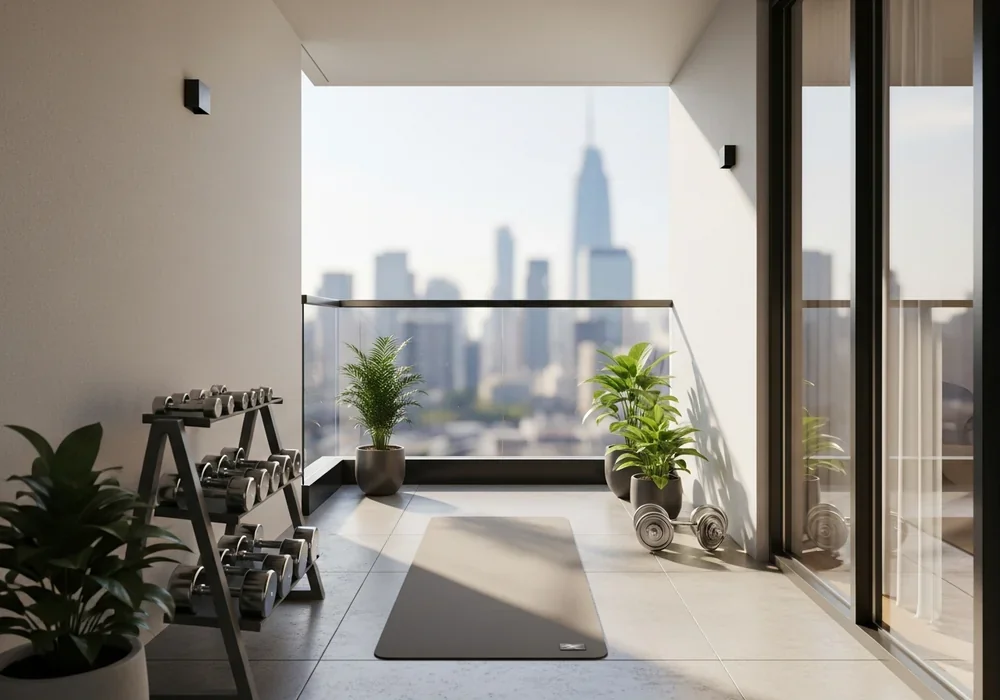
Why your balcony is actually the best room in the house
Imagine waking up to the soft glow of the morning sun hitting your face while you finish your final set of squats. No crowded elevators, no membership cards, and definitely no commute. For most apartment dwellers, the balcony is often a forgotten graveyard for old boxes and drying racks. But what if I told you that this narrow strip of concrete is the key to your most consistent fitness routine ever?
Building a veranda home gym isn’t just about throwing a yoga mat on the floor. It’s about reclaiming a piece of your home to serve your well-being. In the post-2024 era, we’ve seen a massive shift in how we view our living spaces. We no longer want ‘multipurpose’ rooms that do everything poorly; we want specialized sanctuaries that inspire us to be better versions of ourselves.
The psychological benefit of having a dedicated veranda home gym is immense. When you step onto that balcony, your brain switches into ‘beast mode.’ The physical separation from your living room or bedroom helps eliminate the distractions of laundry or Netflix. Plus, the access to natural light and fresh air provides a serotonin boost that a basement gym simply can’t match. It’s time to stop treating your balcony as a storage unit and start treating it as your private fitness club.
The evolution of the ‘Dead Space’ into a wellness sanctuary
Have you ever noticed how much better you feel when you exercise near a window? There’s a reason for that. Biophilic design—the practice of connecting indoor spaces to the natural world—has been proven to lower cortisol levels. By shifting your workout to the balcony, you’re not just saving space; you’re optimizing your biology. Modern veranda home gym trends are moving away from bulky, black plastic machines toward sleek, aesthetic equipment that complements a modern interior.
The DesignHomes definition of a sophisticated workout space
At DesignHomes, we believe a home gym should be an extension of your home’s aesthetic, not a chaotic interruption. A truly sophisticated veranda home gym balances three core pillars: functionality, acoustics, and atmosphere. It’s not just about having the heaviest weights; it’s about how those weights feel in the context of your home.
Think about the textures you use. Instead of industrial-looking gear, we recommend matte finishes and wood accents. A wooden rowing machine can look like a piece of art when standing vertically against a wall. The goal is to create a space that you actually want to spend time in, even when you aren’t working out. When the design is right, the motivation follows naturally.
Small space? No problem: Vertical storage hacks
Is your balcony barely wide enough to stretch your arms? Don’t worry, we’ve designed gyms in spaces as narrow as 1.2 meters. The secret lies in thinking vertically. Most people waste the wall space above waist height, but that’s exactly where your veranda home gym can find its breathing room. Use wall-mounted pegboards to hang jump ropes, resistance bands, and even light dumbbells.
Folding equipment is your best friend here. Modern folding squat racks can retract to sit just 4 inches off the wall when not in use. This keeps the walkway clear for other balcony activities. Also, consider a ‘rolling gym’—a high-quality utility cart that holds your kettlebells and towels, which can be tucked into a corner when the workout is over. It’s all about maximizing the footprint without sacrificing the variety of your exercises.
Mastering the 1.5-meter wide challenge
In a tight veranda home gym, every centimeter counts. Here’s a professional tip: place your most used equipment at the ends of the balcony and keep the center clear for dynamic movements. If you have a treadmill, look for ‘under-desk’ models that can be stored upright. By keeping the floor visible in the center, the space feels larger and less claustrophobic. It’s a simple visual trick that makes a huge difference in your mental state during a HIIT session.
Wide balconies: Creating zones for flow and focus
If you’re lucky enough to have a ‘grand’ or wide balcony, the challenge shifts from storage to zoning. A large, open space can actually feel intimidating if it isn’t structured correctly. We suggest dividing the area into two distinct zones: the ‘Power Zone’ for strength training and the ‘Zen Zone’ for stretching and cardio. This creates a logical flow to your workout.
To define these zones, you don’t need walls. You can use different flooring textures or even a large potted plant to create a soft boundary. For example, use heavy-duty rubber tiles for the weight area and a softer, aesthetically pleasing woven mat for the yoga area. This subtle transition tells your mind exactly what to do as you move through your routine. A veranda home gym with clear zones feels professional and curated.
The ‘Quiet’ Secret: Choosing mats that keep the peace
Let’s be honest: the biggest hurdle to an apartment veranda home gym is the fear of a noise complaint from the neighbor downstairs. Dropping a 10kg dumbbell on a tiled balcony floor sounds like a small explosion to the person living below you. This is why your flooring choice is the most critical investment you will make. You need a multi-layered approach to vibration dampening.
A single thin mat isn’t enough. We recommend a ‘sandwich’ method. Start with a 5mm anti-vibration underlay, then add high-density rubber tiles on top. This structure absorbs the impact before the sound waves can travel through the building’s concrete slab. It’s the difference between a thud and a whisper. Your neighbors will thank you, and you’ll be able to train at 6 AM without guilt.
High-density rubber vs. EVA: Which one wins?
When shopping for veranda home gym flooring, you’ll likely see two main options. Here is how they stack up against each other:
| Feature | High-Density Rubber (900kg/m³+) | EVA Foam Mats |
|---|---|---|
| Durability | Extremely High (Lasts 10+ years) | Low (Indents easily) |
| Noise Reduction | Superior for heavy weights | Good for yoga/bodyweight |
| Weather Resistance | High (UV resistant) | Medium (Can warp in heat) |
| Price | Premium | Budget-friendly |
| Best For | Powerlifting, HIIT, Equipment | Stretching, Pilates, Kids |
For a serious veranda home gym, we almost always recommend high-density rubber. EVA foam is great for a playroom, but it compresses under heavy equipment and can become slippery when you sweat. Rubber provides the grip and stability you need for safe lifting.
Fighting the elements: Insulation and ventilation secrets
A balcony is an outdoor-indoor hybrid, which means it’s subject to the whims of the weather. In the winter, the cold floor can zap your energy; in the summer, it can become a greenhouse. To make your veranda home gym usable year-round, you need to address insulation. Installing a high-quality thermal film on the glass can block up to 70% of solar heat in the summer and retain warmth in the winter.
Condensation is another silent enemy. When you sweat in a cold, enclosed balcony, moisture builds up on the windows, which can lead to mold. The solution is efficient ventilation. If your balcony is glazed, ensure you have a small gap for airflow or install a compact dehumidifier. For the floor, using a raised sub-floor system (like plastic deck tiles) under your gym mats allows air to circulate, preventing moisture from being trapped against the concrete.
Setting the mood: Lighting and mirrors for motivation
Lighting is the ‘secret sauce’ of interior design, and your veranda home gym is no exception. While natural light is great for the morning, many of us work out in the evening. Avoid harsh, overhead fluorescent lights that make the space feel like a hospital. Instead, use LED strip lights along the floor or ceiling. You can even get smart LEDs that change color—blue for focus, red for high-intensity intervals.
And don’t forget the mirrors! A large, wall-to-wall mirror does two things: it allows you to check your form to prevent injury, and it doubles the perceived size of a narrow balcony. It reflects the view from outside, making your gym feel like it’s floating in the sky. It’s the ultimate hack for any veranda home gym to feel twice as spacious as it actually is.
Real transformations: From cluttered mess to zen gym
We recently worked with a client who had a 2-meter long balcony filled with old paint cans and a broken bicycle. By clearing the clutter and installing a custom-fit rubber floor, we transformed it into a ‘Pilates and Power’ studio. We used a vertical rack for their 2kg to 15kg dumbbells and added a few hanging planters. The result? They went from working out once a month to five times a week. The environment dictates the behavior.
Another success story involved a ‘광폭’ (wide) balcony where the owner wanted a full squat rack. We worked with a structural engineer to ensure the weight load was safe (most modern balconies can handle 200-300kg per square meter, but always check your building’s specs!). By placing the rack against the building’s main wall rather than the outer railing, we ensured maximum stability and safety for their veranda home gym.
Budget-friendly vs. Premium: Choosing your path
You don’t need a million dollars to start. A budget-friendly veranda home gym can start with just a set of resistance bands, a high-quality yoga mat, and a pair of adjustable dumbbells. The key is to spend your money where it matters most: the floor. Even with cheap weights, a good floor makes the experience feel premium.
If you’re going for the premium route, look into integrated smart equipment. Bikes or rowers with built-in screens can provide that ’boutique studio’ feel right on your balcony. Combine this with custom cabinetry to hide your gear when not in use, and you have a space that adds significant value to your apartment’s resale price. Design is an investment, not an expense.
Sustainable gains through smart maintenance
Once your veranda home gym is set up, you need to keep it in top shape. Outdoor dust is more aggressive than indoor dust. Wipe down your equipment once a week with a non-corrosive cleaner to prevent rust, especially if you live near the coast. Check your mats for any signs of moisture underneath every few months. A well-maintained gym is a gym you’ll actually use.
In conclusion, your balcony is a goldmine of potential. By following these DesignHomes principles—focusing on high-density flooring, vertical storage, and smart lighting—you can create a veranda home gym that rivals any commercial club. It’s time to breathe new life into your space and your fitness routine. Your future self will thank you for the fresh air and the heavy lifts. Now, what’s stopping you from taking that first step onto the balcony?
자주 묻는 질문
Is it safe to put heavy weights on an apartment balcony?
Most modern apartment balconies are designed to support a live load of 200-300kg per square meter. However, for a veranda home gym with heavy racks, it is best to place the equipment against the structural wall of the building rather than the outer railing. Always consult your building’s management for specific weight limits.
How do I prevent my equipment from rusting on the balcony?
If your balcony is not fully enclosed, humidity and salt air can cause rust. Use equipment with powder-coated finishes, apply a thin layer of silicone spray to exposed metal parts, and use a dehumidifier or weather-stripping to control the environment.
What is the best way to stop noise from traveling to the floor below?
The most effective method is ‘decoupling.’ Use a multi-layer flooring system: a base layer of anti-vibration foam followed by a top layer of high-density rubber tiles (at least 20mm thick). This absorbs the kinetic energy of dropped weights before it becomes noise for your neighbors.

Kumar Tomar is a distinguished writer at DesignHomes.in, specializing in home design and interior decor. Holding a degree in Interior Design from the National Institute of Design, Kumar combines formal education with practical experience to deliver insightful and authoritative content. With over 8 years in the industry, he is known for his in-depth knowledge of design trends and his ability to provide actionable advice for homeowners. Kumar’s expertise and dedication to high-quality writing make him a trusted resource for those seeking to enhance their living spaces. Follow Kumar on Instagram for the latest design inspiration and tips.