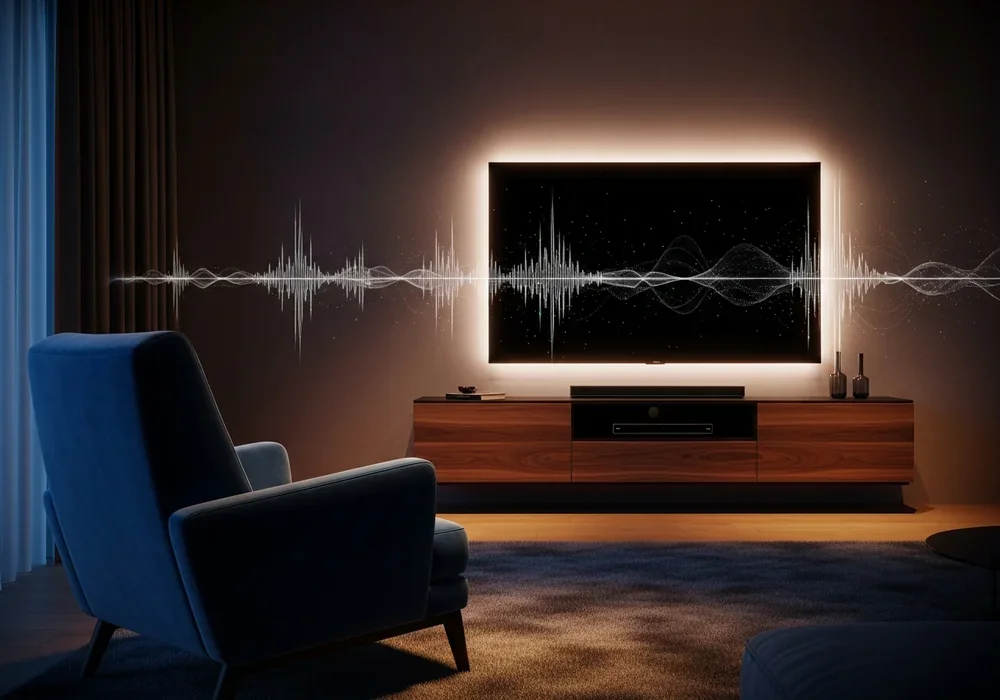
The Invisible Soul of Your Living Room: Why Sound Matters
Imagine sitting in your favorite velvet armchair, the lights dimmed, and a bowl of popcorn in hand. You’ve invested in the latest 75-inch OLED TV, but as the movie starts, the voices sound thin and the explosions lack that chest-thumping impact. Does this sound familiar? In the world of high-end interior design, we often focus so much on what we see that we forget what we hear. Sound is the invisible architecture of a home. It defines the boundaries of your relaxation and the intensity of your entertainment.
Choosing the right audio system isn’t just a technical decision; it’s a lifestyle choice. Whether you prefer the clean, uninterrupted lines of a modern gallery or the complex, layered atmosphere of a professional studio, your audio choice must reflect your personality. Today, we dive deep into the soundbar vs surround speakers comparison to help you decide which system will turn your living room into a true sensory sanctuary.
The Soundbar Revolution: Minimalism Meets Performance
Have you ever looked at your TV stand and wished for something that just… fits? That’s the magic of the soundbar. These long, slender devices are designed to sit perfectly beneath your screen, mimicking the horizontal lines of modern furniture. They represent the peak of ‘plug-and-play’ convenience. Modern soundbars often come wrapped in sophisticated acoustic fabrics or brushed metallic finishes that blend seamlessly with a minimalist aesthetic.
To be honest, the days of soundbars sounding like ‘tinny’ plastic boxes are long gone. With technologies like side-firing drivers and beamforming, a high-end soundbar can bounce sound off your walls to simulate a much larger stage. It’s an incredible feat of engineering that prioritizes your floor space without sacrificing the thrill of the hunt in an action thriller. If you value a clutter-free environment where technology remains subtle, the soundbar is your best friend.
Why Designers Love the Sleek Silhouette
From a DesignHomes perspective, the soundbar is a dream for ‘visual silence.’ There are no messy copper wires snaking across the floor. Most units connect to your TV via a single HDMI eARC cable, and many even offer wireless subwoofers that you can tuck away behind a sofa or next to a sideboard. It’s about maintaining the integrity of your interior design while significantly upgrading your auditory experience.
The Surround System: Pure Immersion for the Enthusiast
If you are someone who wants to feel the rain falling behind you or the roar of a jet engine moving from left to right, a dedicated surround system is unparalleled. This setup involves multiple speakers placed strategically around the room. It’s not just about volume; it’s about ‘channel separation.’ This means the system knows exactly which sound belongs to which corner of your room, creating a three-dimensional bubble of audio.
Think of it as the difference between looking at a painting and standing inside the landscape. A traditional surround system requires an AV receiver—the brain of the operation—which powers each individual speaker. While this takes up more physical space, the depth and clarity provided by dedicated drivers for high, mid, and low frequencies are something a single bar simply cannot replicate perfectly.
Decoding the 5.1 and 7.1 Mystery
You might see these numbers everywhere, but they are quite simple. A 5.1 system consists of five speakers (Center, Front Left, Front Right, Surround Left, Surround Right) and one subwoofer. A 7.1 system adds two more speakers behind you. For the ultimate luxury, ‘Dolby Atmos’ adds height channels, making sound feel like it’s coming from the ceiling. It’s the gold standard for anyone building a dedicated home cinema room.
At a Glance: Soundbar vs Surround Speakers Comparison Table
| Feature | Soundbar System | Surround Speaker System |
|---|---|---|
| Aesthetics | Minimalist, sleek, space-saving | Technical, prominent, industrial |
| Installation | Very Easy (15-30 mins) | Complex (requires wiring & calibration) |
| Sound Immersion | Good (Simulated) | Excellent (Physical/Directional) |
| Price Range | $200 – $2,500 | $800 – $10,000+ |
| Cable Management | Minimal (Wireless options) | Extensive (Requires hiding wires) |
| Upgradability | Limited | High (Replace individual parts) |
As shown in this soundbar vs surround speakers comparison, the choice depends heavily on how much you are willing to let the technology dictate your room’s layout.
Real-World Scenarios: Which One Fits Your Lifestyle?
Here is a question for you: How do you actually use your living room? If your space is a multi-functional area where you host dinners, work from home, and occasionally watch Netflix, a high-end soundbar is likely the smarter move. It provides a massive leap over TV speakers without turning your home into a tech warehouse.
Small Apartments and Minimalist Studios
In a 20-pyeong (approx. 700 sq ft) apartment, every square inch is precious. Placing five separate speakers can make a room feel cramped and cluttered. An all-in-one Dolby Atmos soundbar can use the compact dimensions of the room to its advantage, reflecting sound off the nearby walls to create a surprisingly wide soundstage. It keeps the ‘flow’ of the room open and airy.
Dedicated Media Rooms and Large Houses
If you have a spacious living area or a dedicated basement for movies, the surround system wins every time. Larger rooms have more air to move, and separate speakers can fill that volume with much more authority. Here, the speakers themselves can become design statements. Imagine beautiful wood-veneered tower speakers flanking a large projector screen—it signals a commitment to the art of cinema.
Living with Neighbors: Managing Bass in Urban Apartments
One of the biggest hurdles in modern apartment living is the dreaded ‘inter-floor noise.’ Bass frequencies (the low rumbles) travel through walls and floors with ease. Whether you choose a soundbar or a full system, managing the subwoofer is key to staying on good terms with your neighbors.
Pro-tip: Use anti-vibration pads or a ‘sound-absorbing platform’ under your subwoofer. This decouples the speaker from the floor, preventing the vibrations from turning your neighbor’s ceiling into a drum. Most modern systems also feature a ‘Night Mode’ which compresses the dynamic range, keeping dialogue clear while taming the loud explosions that might wake up the floor below.
The Aesthetic Setup: Room Interior: Mastering High-Performance Networks and Stealth Cable Management”>Cable Management and Placement Mastery
Nothing ruins a beautiful interior faster than a tangled mess of black cables. If you go the surround route, consider running wires behind the baseboards or using paintable cable raceways that match your wall color. For soundbars, the ‘hidden wire’ look is much easier. If your TV is wall-mounted, you can install a recessed media box behind the TV to hide all power and HDMI connections.
When placing your speakers, remember the ‘ear-level’ rule. The tweeters (the small parts of the speaker that handle high sounds) should be as close to your ear height as possible when seated. For soundbars, this means placing them on the top surface of your media console, not tucked inside a cabinet where the sound will become muffled and boozy.
Curated Recommendations for Every Budget
- The Entry-Level Hero (Under $500): Look for an all-in-one soundbar with a built-in subwoofer. It’s a massive upgrade for those on a budget who want a cleaner look.
- The Premium Choice ($1,000 – $2,000): This is the ‘sweet spot.’ You can find flagship soundbars that include wireless rear speakers. This gives you a soundbar vs surround speakers comparison winner that offers the best of both worlds: easy setup with real rear-channel immersion.
- The Audiophile’s Dream ($3,000+): A dedicated AV receiver paired with bookshelf speakers from brands like KEF or Bowers & Wilkins. This isn’t just a sound system; it’s a piece of furniture that will last decades.
The Future of Home Audio: Smart Integration
Finally, we must look toward the smart home. Modern audio systems are no longer just for movies. They integrate with your phone, your lights, and even your morning routine. Choosing a system that supports Wi-Fi streaming (like AirPlay 2 or Chromecast) ensures your living room can transform from a high-octane cinema into a soothing jazz lounge with a single voice command.
In the end, the soundbar vs surround speakers comparison isn’t about which one is ‘better’ in a vacuum. It’s about which one honors your space. Do you want the technology to be a bold statement or a silent partner? Whichever you choose, ensure it brings you joy every time you press ‘play.’ After all, a home that sounds as good as it looks is a home truly worth living in.
자주 묻는 질문
Can a soundbar really replace a 5.1 surround system?
While high-end soundbars use clever ‘acoustic bouncing’ to simulate surround sound, they can’t quite match the physical separation of real speakers placed behind you. However, for 90% of users in standard living rooms, a premium soundbar provides a more than satisfying experience without the clutter.
Is it worth buying a cheap surround sound system?
Generally, no. A high-quality soundbar will almost always outperform a ‘home theater in a box’ that uses cheap plastic speakers. If your budget is under $500, stick to a reputable soundbar.
How do I hide wires for surround speakers if my house is already built?
You can use flat adhesive speaker wires that can be painted over, or run cables under the edge of your carpet. Alternatively, look for ‘Wireless Rear’ systems where the back speakers only need a power outlet, not a connection to the front of the room.

Kumar Tomar is a distinguished writer at DesignHomes.in, specializing in home design and interior decor. Holding a degree in Interior Design from the National Institute of Design, Kumar combines formal education with practical experience to deliver insightful and authoritative content. With over 8 years in the industry, he is known for his in-depth knowledge of design trends and his ability to provide actionable advice for homeowners. Kumar’s expertise and dedication to high-quality writing make him a trusted resource for those seeking to enhance their living spaces. Follow Kumar on Instagram for the latest design inspiration and tips.