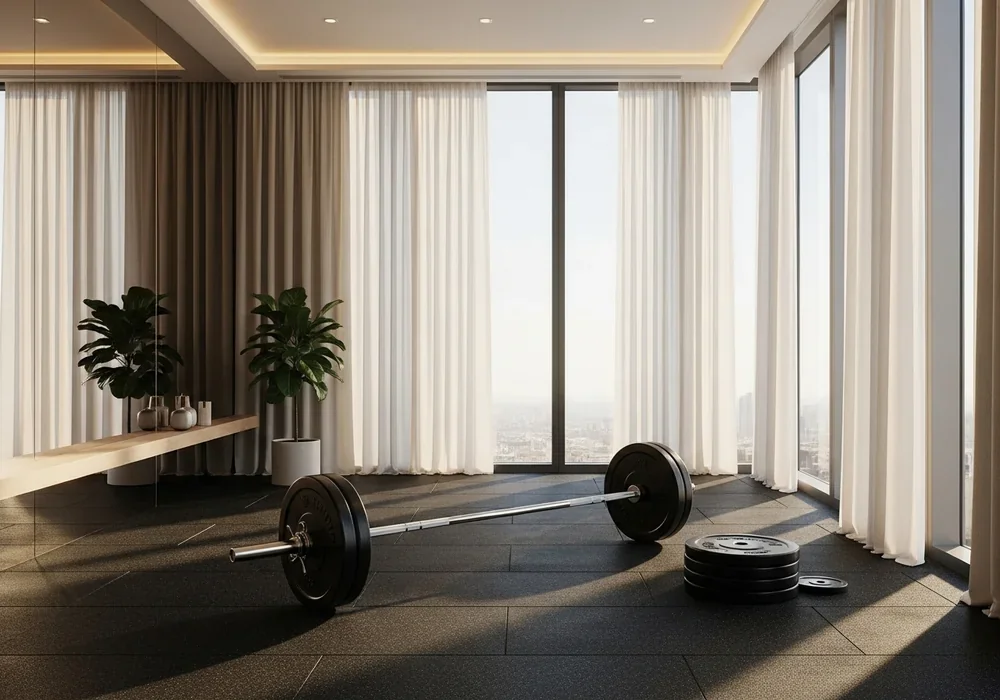
Why Flooring is the Undisputed Foundation of Your Luxury Home Gym
Imagine the perfect morning. You wake up, grab a double espresso, and head into your dedicated workout sanctuary. The air is crisp, the lighting is just right, and your equipment gleams under the soft glow of recessed LEDs. You prepare for a heavy set of deadlifts, but as the plates touch the ground, a sharp ‘thud’ echoes through the floorboards. Suddenly, the spell is broken. You aren’t just a dedicated athlete anymore; you’re the ‘noisy neighbor’ from 4B.
Choosing the right home gym flooring isn’t just about protecting your hardwood or tiles. It is about creating a psychological boundary between your living space and your performance zone. When you step onto a high-quality surface, your brain switches into ‘work’ mode. It provides the grip you need for a heavy squat and the cushioning your knees crave during high-intensity intervals. More importantly, it acts as a silent guardian of your relationship with those living beneath you.
Have you ever wondered why some home gyms feel like a professional boutique studio while others just look like a cluttered spare room? The secret almost always lies beneath your feet. A well-chosen surface transforms a cold, hard floor into a Cinema?”>into a resilient, high-performance stage. In this guide, we aren’t just looking at mats; we are designing the foundation of your lifestyle. Let’s dive into how you can achieve that perfect balance of aesthetics and acoustic engineering.
The Physics of Silence: Understanding Vibration vs. Impact
To solve the noise problem in an apartment, you have to think like an engineer. Most people assume a thick mat is enough, but noise travels in two distinct ways: airborne and structure-borne. Airborne noise is the sound of your heavy breathing or the music playing from your speakers. Structure-borne noise, however, is the real villain in an apartment home gym. This is the vibration caused by a treadmill motor or the sudden shock of a dumbbell hitting the floor.
Structure-borne vibrations travel through the rigid concrete or wood framing of a building like ripples in a pond. If your flooring doesn’t have the right density to dissipate this energy, your neighbor downstairs will hear every single footfall as if it were happening in their own living room. This is why a standard yoga mat is virtually useless for weightlifting; it lacks the mass and cellular structure to catch those vibrations before they enter the building’s skeleton.
For those using heavy machinery like treadmills or rowing machines, the ‘hum’ of the motor is often more annoying to neighbors than the occasional drop of a weight. High-frequency vibrations require a different dampening approach than low-frequency thuds. A professional-grade shock absorption mat specifically designed for high-load environments is your best defense against the dreaded knock on the door. It’s about creating a disconnect between your movements and the building itself.
Material Showdown: Which Surface Matches Your Training Style?
When you browse for home gym flooring, the sheer variety can be overwhelming. But for the discerning homeowner, three main contenders stand out. Each offers a unique texture, visual appeal, and functional profile. Choosing the right one depends entirely on whether you’re chasing a zen yoga retreat or a hardcore powerlifting den.
The Industrial Elegance of High-Density Rubber Blocks
If your routine involves heavy iron, rubber blocks are your best friend. Typically available in 50cm x 50cm or 1m x 1m squares, these blocks offer a rugged, professional look. They feature a dense, pebbled texture that provides incredible grip even when you’re sweating through a final set. From a design perspective, the matte charcoal finish of high-quality rubber blocks adds a sophisticated, ‘industrial chic’ vibe to any room. They are heavy, stay in place without adhesive, and offer the highest level of impact protection available for residential use.
Everoll: The Sleek, Seamless Choice for Modern Aesthetics
For those who prioritize a seamless, high-end look, Everoll is the gold standard. Often seen in premium commercial gyms, this rolled rubber flooring eliminates the visible seams found in interlocking tiles. It comes in various color flecks—subtle greys, blues, or even cork—allowing you to match your gym to your home’s existing color palette. It’s incredibly easy to clean and offers a firm, stable surface that is perfect for functional training and cardio equipment. It feels premium underfoot and looks like a permanent architectural feature rather than a temporary fix.
| Material Type | Best For | Durability | Noise Reduction | Aesthetics |
|---|---|---|---|---|
| Rubber Blocks (25mm+) | Heavy Lifting, Crossfit | Extreme | Excellent | Industrial/Pro |
| Everoll (Rolls) | General Fitness, Cardio | High | Good | Seamless/Modern |
| EVA Foam Mats | Yoga, Bodyweight, Kids | Low | Moderate | Functional |
The ‘T-Factor’: Choosing the Right Thickness for Your Goals
In the world of home gym flooring, thickness (often referred to as ‘T’ or mm) is the most critical metric. Getting this wrong can lead to cracked tiles or, worse, injured joints. You wouldn’t wear flip-flops to run a marathon, so don’t expect a 5mm mat to handle a 100kg barbell drop. The thickness you choose should be a direct reflection of your equipment’s weight and your body’s impact levels.
- 6mm to 10mm (The Lightweight Layer): Ideal for yoga, pilates, and stretching. This thickness provides just enough ‘give’ to protect your spine during floor work without being so squishy that you lose your balance during a tree pose.
- 15mm to 20mm (The All-Rounder): This is the sweet spot for most home users. It’s thick enough to handle dumbbells up to 20kg and provides excellent dampening for cardio machines. It’s the standard health club mat thickness for a reason.
- 25mm to 50mm (The Heavy Hitter): If you are performing deadlifts or using a power rack, 25mm is the absolute minimum. For serious strength training in an apartment, we recommend a 50mm high-density mat or a multi-layered approach to ensure the floor underneath remains pristine.
Here is a professional tip: always calculate the ‘point load’ of your heaviest equipment. A heavy squat rack concentrates hundreds of kilograms onto four small feet. Without a thick, high-density base, those feet will eventually sink through the mat and damage your subfloor. Always err on the side of caution and go one step thicker than you think you need.
The Master’s Secret: The Three-Layer ‘Sandwich’ Installation
For the ultimate apartment home gym, a single layer of flooring is rarely enough. To achieve true acoustic isolation and a pro-level feel, we recommend the ‘Sandwich Method.’ This technique layers different materials to address various types of noise and vibration, creating a total barrier between your workout and the world.
First, start with a base layer of thin, high-density foam or specialized acoustic underlay. This layer is designed specifically to trap high-frequency vibrations from motors. Next, add your core layer—typically a 25mm high-density rubber block. This provides the structural integrity and impact absorption needed for weights. Finally, finish with a top layer of Everoll or a thin aesthetic mat. This top layer provides a seamless look, makes cleaning a breeze, and ensures your feet have the perfect amount of traction.
When installing, pay close attention to the edges. A professional finish requires a sharp utility knife and a straight edge. Tucking the mats tightly against the baseboards or using transition strips at the doorway makes the space feel intentional. If you’re worried about the mats shifting, use double-sided carpet tape or specialized floor adhesive. However, for most heavy rubber blocks, their own weight is usually enough to keep them anchored through even the most intense HIIT session.
Design Meets Function: Elevating Your Workout Atmosphere
A home gym shouldn’t look like a dungeon. Since this space is part of your home, its design should reflect your personal style. Use your home gym flooring as the anchor for the room’s color story. Dark, charcoal floors look incredible when paired with warm, indirect lighting. Consider installing a smart LED strip along the baseboards to give the floor a ‘floating’ effect, which can make a small room feel much more expansive.
Mirrors are another essential element. Not only do they allow you to check your form, but they also bounce light around the room, preventing the heavy black flooring from making the space feel cramped. Position a large, frameless mirror on the wall opposite your main workout area. This creates a sense of depth and professional polish. Remember, the more you enjoy being in the space, the more likely you are to use it. Your gym is an investment in your health, but it’s also an investment in your home’s value and aesthetic appeal.
Summary & Final Thoughts
Building a home gym is a journey of transformation. By choosing the right home gym flooring, you are doing more than just protecting your house; you are showing respect for your neighbors, your body, and your craft. Remember these three pillars: choose the right material for your training style, never skimp on thickness, and consider the ‘sandwich’ method for total silence. With the right foundation, your home gym won’t just be a place to sweat—it will be your favorite room in the house. Now, it’s time to stop planning and start building. Your future self (and your downstairs neighbor) will thank you.
자주 묻는 질문
How do I get rid of the strong rubber smell from new mats?
New rubber flooring often has a distinct ‘factory’ scent. To accelerate the off-gassing process, mop the mats with a mixture of neutral pH cleaner and water, then keep the windows open for 48-72 hours. Placing a few bowls of activated charcoal in the room can also help absorb the odor.
Can I install heavy rubber blocks over carpet?
It is possible, but not ideal. Placing heavy mats over plush carpet can cause the mats to shift or ‘wave’ during exercise. If you must do this, use a thin plywood subfloor between the carpet and the rubber blocks to provide a stable, flat surface.
Will 25mm thickness really stop my neighbor from hearing my treadmill?
While 25mm helps significantly, a treadmill’s motor produces constant vibration. For the best results, use a dedicated anti-vibration pad specifically under the treadmill’s feet in addition to your 25mm flooring.

Kumar Tomar is a distinguished writer at DesignHomes.in, specializing in home design and interior decor. Holding a degree in Interior Design from the National Institute of Design, Kumar combines formal education with practical experience to deliver insightful and authoritative content. With over 8 years in the industry, he is known for his in-depth knowledge of design trends and his ability to provide actionable advice for homeowners. Kumar’s expertise and dedication to high-quality writing make him a trusted resource for those seeking to enhance their living spaces. Follow Kumar on Instagram for the latest design inspiration and tips.